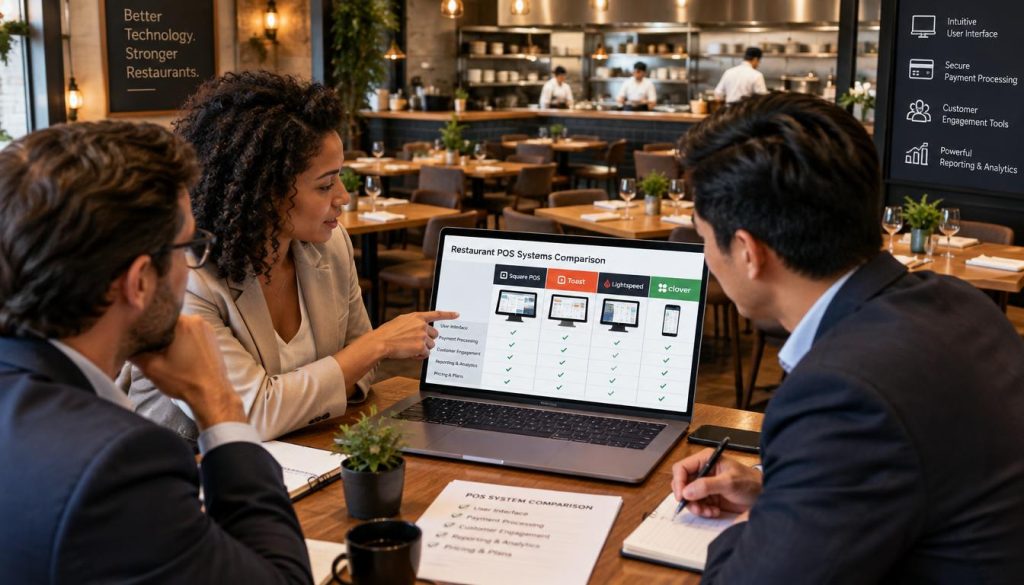
Never rush into changing your digital infrastructure until you fully understand what you own. Many operators assume a simple download will move their entire history to a new restaurant management system. In reality, moving information is rarely that straightforward.
Historical records, menu structures, and customer profiles often fail to migrate cleanly. You must audit your current files, test every connection, and verify your records before committing to a cutover. If you are switching your POS system, you need a clear plan to protect your operational continuity.
Inventory lists and menu items are frequently underestimated during transitions. Meanwhile, historical sales often remain trapped in archived files rather than becoming active reports in your new platform. Whether you are managing a café or hospitality software for hotels with restaurants, your preparation determines your success.
Key Takeaways
- Audit your existing information before cancelling any current service agreements.
- Recognise that menu structures and inventory lists often require manual reconstruction.
- Download all historical sales reports as these rarely transfer to new platforms.
- Verify the status of gift cards and loyalty balances to avoid losing customer funds.
- Test every third-party integration individually, as these connections do not migrate automatically.
- Budget sufficient time for staff training and role recreation before your go-live date.
Restaurant Software Data Export: Audit What You Own Before Switching
A successful migration starts with a clear understanding of the data you currently own. Before you initiate a restaurant software data export, you must create a comprehensive data register. This document acts as your roadmap, separating records that are essential for day-one operations from those that only require secure reference access.
Your sales history and menu items are the backbone of your business intelligence. When you export data from POS, do not assume every field will map perfectly to your new platform. You must count your records and identify any missing values or inconsistent pricing structures.
Inconsistent naming conventions for menu items often lead to broken reporting. If your current system has discontinued items or duplicate entries, clean these up before the transfer. Data hygiene at this stage prevents significant headaches during your transition to a new restaurant management system.
Bookings, loyalty, suppliers, staff and operational history
Beyond sales, you must account for your CRM and operational logs. Audit your loyalty member counts and staff records to ensure you are not carrying over redundant or corrupted files. Verify that your supplier information is current, as outdated contact details will disrupt your procurement workflows immediately.
Effective restaurant data analysis relies on the integrity of your historical records. If you allow a migration process to invent default values for missing fields, your future reports will be inaccurate. Always flag these gaps early rather than hoping for an automated fix.
Finally, keep your old platform available in read-only mode for 30 to 60 days. This buffer allows you to perform necessary reconciliations and answer historical queries without pressure. Maintaining access to your legacy data ensures that you retain full control over your business history during the switch.
Test File Formats, Export Access and Data Export Integration
Successful restaurant software solutions rely on rigorous testing of your exported files. Before you move to a new system, you must validate your data export integration to ensure accuracy. A structured approach prevents costly errors during your transition.
Check field names, date formats, tax treatment and Australian dollar values
You should run a pilot test using a sample CSV or spreadsheet. Ensure that every column header matches the requirements of your new platform. Pay close attention to these specific data points:
- Field Names: Verify that headers align exactly with the import template.
- Date Formats: Standardise to DD/MM/YYYY to avoid system confusion.
- Tax Treatment: Confirm GST calculations are correctly mapped for Australian compliance.
- Currency: Ensure all values are formatted as Australian dollars without hidden symbols.

Identify missing historical records, duplicates and locked data
Do not rely on the software to fix errors automatically. If you find a duplicate menu item or a missing cost, place these records into a review queue for manual inspection. This process ensures that your restaurant data analysis remains clean and reliable.
Locked historical fields often cause import failures. Identify these early by checking your record counts against the source system. If a field is locked, document the exception rather than forcing an override.
Check evidence for links between the POS, menumiz, Hospoforce and Hospomarket
Never assume that your systems are automatically connected. You must request current evidence of supported interfaces for your POS, menumiz, Hospoforce, and Hospomarket setups. Ask for documentation regarding data direction, frequency, and failure handling.
Operators often try to automate data export without verifying the underlying link. Confirm that the interface is active and supported by the vendor. If the connection is not verified, treat the systems as independent entities.
Confirm what Restaurantility manages separately and what requires manual transfer
Clearly define the boundaries of your new setup. Restaurantility may handle specific inventory or reporting tasks, but other processes might remain in your legacy platform. You must identify which workflows require manual transfer to avoid operational gaps.
Pay special attention to payroll, rostering, and staff processes. If these have not been verified for integration, plan for a manual cutover. Conduct edge-case testing for split checks, refunds, and discounts during a quiet service period to ensure your restaurant data analysis remains accurate.
Conclusion
A successful transition between systems relies on your ability to govern your own information. The safest switch starts with a complete inventory of owned data rather than a flashy software demonstration. You must clean your source data, test files in staging, and document locked records to avoid operational gaps.
Australian hospitality operators should prioritise verified data access over broad integration promises. A single-location migration often takes one to two weeks. Multi-location or high-volume businesses require a longer, controlled rollout to maintain service standards. Always preserve read-only access to your old system until you verify every integration point.
Modern restaurant technology trends place governance and operational control at the centre of every decision. You should evaluate restaurant software solutions based on how well they fit your specific environment. Your choice of platform dictates your long-term agility and data ownership.
Contact Hospoware to discuss your connected-operations requirements. We help you navigate the complexities of data migration and current restaurant technology trends. Let us review your environment and define the practical steps needed for a seamless transition.