
The landscape for Australian operators is shifting rapidly. As we move into 2026, staying ahead requires more than just standard service. You must embrace hotel technology trends to remain competitive in a crowded market. Modern guests now expect a seamless digital guest experience from the moment they start searching for their next stay.
Data from SiteMinder’s Changing Traveler Report 2026 reveals that 80% of travellers now want AI in hospitality to assist them. This support spans from initial inspiration to final booking confirmation. If your business lacks these digital touchpoints, you risk losing visibility to more agile competitors.
Adopting innovative systems is no longer optional. By leveraging cloud software and integrated platforms, you can streamline your daily operations effectively. These tools help you capture demand and provide the personalised service that today’s travellers demand.
Key Takeaways
- Eighty per cent of travellers now seek AI assistance during their booking journey.
- Digital guest experiences are now a baseline expectation for modern travellers.
- Cloud-based platforms are essential for maintaining operational visibility and efficiency.
- Automation allows your team to focus on high-value human interactions.
- Real-time data analytics provide the clarity needed for smarter business decisions.
The Evolution of Hotel Technology Trends in 2026
The evolution of hotel technology is redefining how we manage properties and serve guests. As we look toward the future, staying competitive requires a firm grasp of the latest hotel technology trends that are currently reshaping the market. Operators who embrace these shifts will find it easier to meet the rising expectations of modern travellers.
Adopting hospitality industry innovations is no longer optional for those aiming to scale efficiently. From cloud-based software to fully integrated platforms, the goal is to remove friction from your daily operations. Automation is the key to freeing up your staff to focus on high-value guest interactions rather than repetitive manual tasks.
We are seeing a massive surge in smart hotel solutions that transform the guest room into a responsive environment. By leveraging iot for hotels, you can now automate lighting, climate control, and entertainment systems based on real-time guest preferences. This level of personalisation creates a seamless experience that feels both intuitive and premium.
The demand for contactless services has moved from a temporary necessity to a standard guest expectation. Guests now prefer the convenience of mobile check-in and digital room keys. Furthermore, the implementation of a virtual concierge allows your team to provide instant support without the need for a physical presence at the front desk.
Finally, the shift toward data analytics in hotels is changing how you make business decisions. You can now move beyond static, manual reporting to gain live insights into your occupancy, revenue, and guest behaviour. Real-time data visibility empowers you to adjust your strategy on the fly, ensuring your property remains profitable and responsive to market changes.
- AI-driven personalisation for room settings.
- Mobile ordering and self-service kiosks.
- Integrated cloud platforms for central management.
- Automated workflows to reduce operational friction.
Driving Operational Efficiency and Guest Satisfaction
You can transform your hotel’s performance by integrating smart hotel solutions that bridge the gap between guest expectations and operational reality. Recent hospitality industry innovations focus on removing friction from the guest journey while simultaneously streamlining your back-of-house processes. By moving away from manual, siloed systems, you gain the agility needed to respond to market shifts in real-time.
Effective management requires moving beyond guesswork. Utilizing data analytics in hotels allows you to base your decision-making on factual information rather than assumptions. By tracking occupancy trends and revenue streams, you can optimize staffing and housekeeping schedules with precision. This level of clarity ensures your team spends less time on repetitive administrative tasks and more time delivering the high-touch service that defines your brand.
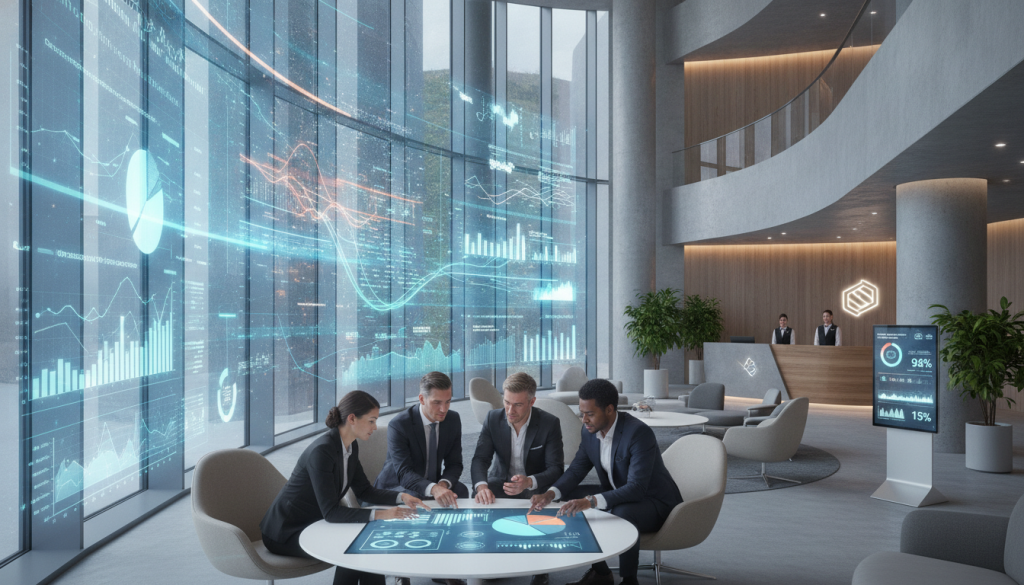
Modern guests now expect seamless digital interactions throughout their stay. Implementing contactless services and a virtual concierge allows you to meet these demands without increasing your headcount. These tools provide guests with instant access to services, from mobile ordering to room requests, directly from their own devices.
To achieve true operational harmony, you need a robust infrastructure that connects your fragmented systems. Hospoware provides the necessary framework to manage mobile ordering and automated workflows from a single, intuitive interface. By leveraging the hospitality technology solutions found at Hospoware, you can integrate IoT for hotels to monitor energy usage and room status automatically.
Adopting an integrated platform approach offers several distinct advantages for your property:
- Centralised Control: Manage all operational workflows from one dashboard to reduce human error.
- Real-time Insights: Use live data to adjust staffing levels based on actual guest demand.
- Enhanced Guest Experience: Provide faster, more accurate service through automated communication channels.
- Improved Profitability: Eliminate waste and optimize resource allocation across all departments.
Ultimately, the goal is to create a frictionless environment where technology works in the background. When your systems communicate effectively, your staff can focus on what truly matters: the guest experience. Investing in these digital tools today secures your competitive edge in an increasingly demanding market.
Conclusion
The transition to a tech-forward operation remains essential for maintaining a competitive edge in the Australian hospitality market throughout 2026. You regain control over your operational efficiency and guest satisfaction levels by integrating AI, automation, and robust data analytics.
Audit your current systems to identify where purpose-built technology bridges the gaps in your service delivery. Focus on areas where data is duplicated or staff rely on manual workarounds. These specific points often hide the biggest efficiency losses within your business.
Prioritize integrated vendors that offer connected systems rather than isolated tools. Request proof of real-world implementation success to ensure your investment delivers measurable results. The hotels that win over the next five years will be the ones using technology strategically to compete smarter and make better-informed decisions.
Embracing these hotel technology trends ensures your business remains resilient, profitable, and ready to meet the evolving needs of your guests. Ready to build a tech stack that works as hard as you do? Talk to the Zucchetti North America team about the right combination of tools for your property.











