
Running a venue in Australia today requires more than just great food and service. You need clear visibility into your daily operations to stay ahead of the competition. Many owners still rely on manual tracking, which often leads to missed opportunities and hidden costs.
Modern hospitality technology changes this dynamic entirely. By moving away from fragmented spreadsheets, you can transform raw numbers into actionable insights that drive real growth. This shift is essential for any operator looking to scale effectively.
We believe that data should work for you, not against you. Through the connected ecosystem of Hospoware, you can eliminate operational friction and streamline your reporting. This integrated approach allows for better hospitality decision-making, ensuring every dollar spent contributes to your bottom line.
Understanding your restaurant performance metrics is the foundation of a sustainable business. When you have the right tools, you gain the confidence to make bold moves that improve efficiency and boost profitability across your entire venue.
Key Takeaways
- Transitioning from manual tracking to integrated systems saves valuable time.
- Data-driven insights are vital for maintaining a competitive edge in Australia.
- Connected technology eliminates operational friction and improves overall workflow.
- Accurate reporting allows for smarter, faster business decisions every day.
- Focusing on core indicators helps you maximise profit and customer satisfaction.
Essential Restaurant Performance Metrics for Australian Venues
Precise restaurant performance metrics are the backbone of every profitable venue across Australia. Relying on gut feeling is no longer enough in a market defined by thin margins and rising costs. By implementing robust restaurant reporting, you gain the clarity needed to make informed, high-stakes decisions.
Modern dashboard analytics allow you to visualise your business health in real-time. This data-centric approach moves you beyond guesswork, helping you identify exactly where your venue is losing margin. Precision is your greatest asset when navigating the complexities of the local hospitality landscape.
Key Financial Indicators for Profitability
Tracking Gross Profit Margins and Prime Costs
Your gross profit margins represent the lifeblood of your operation. You must track these alongside your prime costs—the sum of your cost of goods sold and total labour—to ensure your menu pricing remains sustainable. Keeping these figures tight is essential for long-term viability.
Analysing Daily Revenue Streams and Average Transaction Value
Understanding your daily revenue streams provides a clear picture of your peak trading periods. By monitoring your average transaction value, you can identify opportunities for upselling or menu engineering. Data-driven insights help you capitalise on every customer interaction.
Operational Efficiency and Staff Productivity
Monitoring Table Turnover Rates and Kitchen Throughput
High operational efficiency is often hidden in the details of your floor and kitchen workflow. Monitoring table turnover rates helps you identify bottlenecks that prevent you from maximising capacity. Similarly, tracking kitchen throughput ensures your back-of-house team maintains pace with front-of-house demand.
Measuring Labour Cost Percentages Against Sales
Labour is often your largest controllable expense. You can reduce labour costs by 20% without cutting staff or by aligning your roster with real-time sales data. Consistently measuring labour cost percentages against your actual revenue is a non-negotiable practice for any successful operator.
Customer Satisfaction and Retention Data
Utilising Feedback Loops to Improve Service Quality
Your guests provide the most valuable data through their direct feedback. Utilising structured feedback loops allows you to address service gaps before they impact your reputation. Listening to your patrons is the fastest way to refine your service standards.
Analysing Repeat Patronage and Loyalty Trends
Focusing on customer retention is significantly more cost-effective than constantly chasing new business. By analysing repeat patronage, you can identify which loyalty trends actually drive revenue. Building a loyal base ensures your venue remains a staple in your local community.
Leveraging the Hospoware Ecosystem for Data-Driven Growth
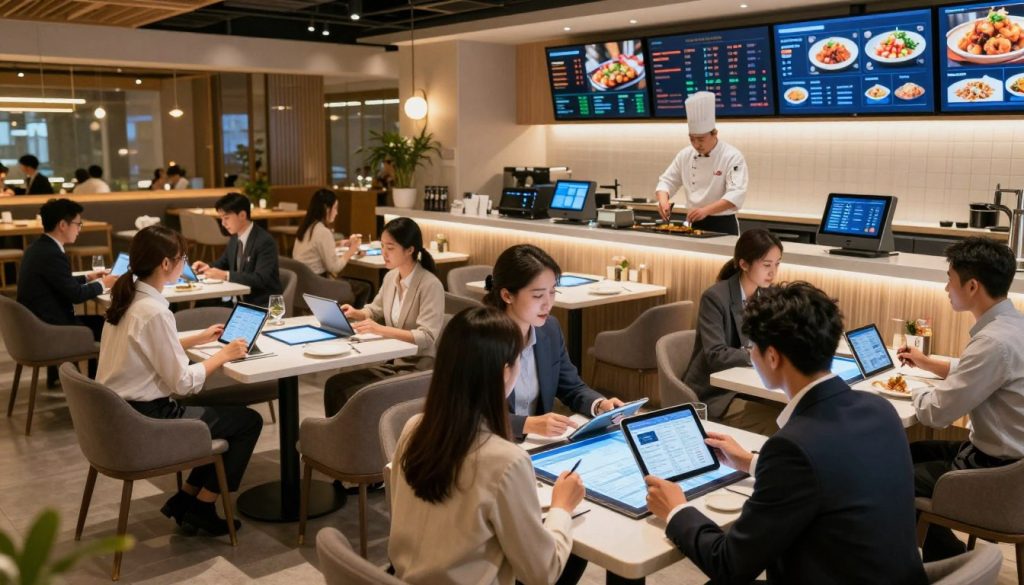
Achieving true operational efficiency starts with connecting your disparate software platforms into one cohesive unit. By moving away from siloed applications, you create a foundation for data-driven growth that allows you to scale with confidence. This approach relies on integrated hospitality systems that ensure your front-of-house and back-of-house data speak the same language.
Automating Reporting with Integrated Cloud Software
Modern cloud software eliminates the manual burden of data entry and reconciliation. When your systems are linked, you gain a real-time view of your business performance without waiting for end-of-month reports. This shift is essential for operators who want to stay ahead in a fast-paced market.
Streamlining Menu Management with Menumiz and Menumiz Brand
Effective menu management is the cornerstone of profitability. By using Menumiz, you can update pricing and availability across all channels instantly. Integrating this with Menumiz Brand ensures your digital presence remains consistent and professional, protecting your margins from costly errors.
Optimising Workforce Planning via Hospoforce and Hospoforce Portal
Labour costs are often your largest expense, making precise workforce planning non-negotiable. Hospoforce provides the tools to align your staffing levels with actual demand. Through the Hospoforce Portal, your team gains transparency, which significantly improves staff retention and operational flow.
Harnessing Business Intelligence for Multi-Location Management
Scaling to multiple venues requires robust business intelligence to maintain quality and control. When you centralise your data, you can compare performance across sites and identify which locations are driving your success. For a deeper dive into how these tools impact your bottom line, consider evaluating restaurant analytics software market trends to refine your strategy.
Centralised Procurement through Hospomarket
Supply chain volatility can disrupt even the best-run kitchens. Hospomarket centralises your procurement process, allowing you to manage orders and supplier relationships from a single interface. This centralised procurement model reduces waste and ensures you always have the stock you need at the right price.
Advanced Analytics with Restaurantility and Restaurantility Insights
You need more than just raw numbers to make informed decisions. Restaurantility provides the dashboard analytics necessary to track KPIs across your entire group. With Restaurantility Insights, you can transform complex data sets into actionable strategies that drive revenue.
The Role of AI in Predictive Forecasting and Workflow Automation
The future of hospitality lies in predictive forecasting and intelligent workflow automation. By leveraging AI, you can anticipate busy periods and adjust your inventory or staffing before a crisis occurs. This proactive stance ensures your operations remain agile, profitable, and ready for whatever the market brings next.
Conclusion
Mastering restaurant performance metrics is no longer optional for operators aiming to scale in the current Australian market. Relying on gut instinct is a risk that modern venues cannot afford to take.
By integrating your systems through the Hospoware ecosystem, you regain control over your data and eliminate the friction that hinders growth. You can explore how Ordering Stack supports key HoReCa KPIs to see how unified operations transform your bottom line. This level of visibility ensures your hospitality decision-making is as precise as your service.
Future-proofing your business requires a shift toward digital maturity. Consistent application of these insights will deliver the measurable business advantage required to thrive in a competitive landscape. Start leveraging these tools today to turn raw data into sustainable profit.











