
Running a venue in the current Australian hospitality market requires more than just great service. You need systems that work as hard as your team does. Modern hospitality software acts as the backbone for your business, helping you stay competitive while keeping your operations lean.
By embracing a smarter approach to your daily workflows, you can remove the friction that slows down your staff. Whether you manage a busy café or a large hotel, the right tools allow you to focus on what truly matters: the guest experience. You can learn more about how this shift impacts your bottom line by reading the complete guide to hospitality technology.
The Hospoware ecosystem is designed to help you bridge the gap between fragmented systems. When your tech stack communicates effectively, you gain the clarity needed to drive growth and profitability. It is time to stop managing chaos and start leading with operational efficiency.
Key Takeaways
- Modern software is essential for staying competitive in the local market.
- Reducing operational friction directly improves the quality of service for your guests.
- Integrated systems provide the data needed to make smarter business decisions.
- Strategic technology adoption helps future-proof your venue against industry shifts.
- Empowering your team with the right tools leads to better overall performance.
The Strategic Value of Hospitality Digital Transformation
Digital transformation is no longer a luxury for Australian hospitality businesses; it is a survival strategy. As market pressures mount, operators must move beyond outdated manual processes to remain competitive. Embracing a comprehensive hospitality digital transformation allows you to regain control over your venue’s performance.
Modernising Australian Hospitality Operations
Fragmented systems are the primary cause of operational friction in many venues. When your point-of-sale, inventory, and staff management tools do not communicate, you lose valuable time and accuracy. Implementing modern restaurant technology is the most effective way to bridge these gaps.
Hospoware provides the essential framework to connect these disparate systems into a single, cohesive ecosystem. By centralising your operations, you significantly improve operational efficiency. This shift allows your team to focus on guest service rather than wrestling with administrative bottlenecks.
Driving Profitability Through Data-Driven Decisions
The current economic climate is unforgiving, with 95% of retail executives expecting global trade policies to push their costs higher this year. For venue owners, this means that every cent counts. You cannot manage what you do not measure, which is why data analytics has become a non-negotiable asset.
By leveraging real-time insights, you can make informed choices that directly impact your business profitability. Understanding your margins and labour costs in real-time allows for rapid adjustments to market changes. This proactive approach is the foundation for sustainable hospitality business growth in an increasingly complex industry.
Core Components of a Connected Hospitality Ecosystem
Fragmented systems are the silent killers of profit in the modern Australian hospitality landscape. When your front-of-house tools operate in a vacuum, you lose the ability to make informed, split-second decisions. A connected business system is no longer a luxury; it is the foundation of a resilient venue.
Integrating POS, Workforce Management, and Procurement
True operational efficiency begins when your core platforms communicate without friction. By using tools like Hospoware, you can bridge the gap between your restaurant technology and your back-office needs. This integration ensures that your POS data flows directly into your procurement and workforce management modules.
When these systems align, you eliminate the need for manual data entry and reduce the risk of human error. Whether you are running a single café or a multi-site franchise, having your POS integration, staff scheduling, and inventory procurement in one place provides a single source of truth. This level of connectivity allows you to track costs against revenue in real time.
Leveraging Cloud Technology for Real-Time Visibility
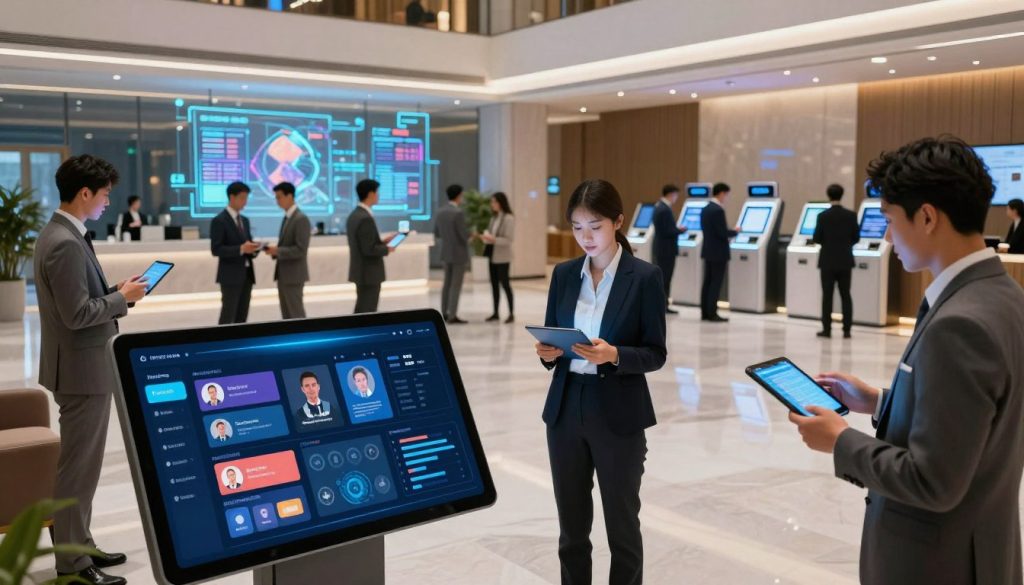
The shift to cloud technology has fundamentally changed how operators view their business performance. You no longer need to be physically present on the floor to understand your margins or labour costs. With cloud-based café management software, you gain real-time visibility into every aspect of your operation from any device.
This accessibility is vital for managing complex hospitality environments. You can monitor stock levels, adjust rosters based on live sales data, and review procurement trends instantly. By centralising your hospitality software, you gain the agility required to pivot quickly when market conditions change.
The Role of Automation in Reducing Manual Labour
The next frontier for venue owners is the strategic use of hospitality automation to reclaim lost time. By automating repetitive administrative tasks, you allow your team to focus on what matters most: the guest experience. Recent industry data shows that 68% of retail executives expect to deploy agentic AI for core operational activities within the next 12 to 24 months.
This evolution of AI in hospitality is moving beyond simple task-based tools. We are entering an era where intelligent systems can own specific functions, such as automated ordering or predictive rostering. This shift leads to a significant manual labour reduction, ensuring your staff remains productive and engaged in high-value interactions rather than buried in spreadsheets.
Implementing Digital Solutions with Hospoware
Modern hospitality demands more than just hard work; it requires the right digital ecosystem. By centralising your operations, you move away from fragmented processes that drain your time and resources.
Hospoware acts as the core hub for your venue, ensuring that every piece of technology works in harmony. This approach allows you to focus on what truly matters: delivering exceptional service to your patrons.
Streamlining Guest Experiences and Marketing
Your guest experience is the foundation of long-term loyalty. When you integrate your marketing efforts with your operational data, you create personalised interactions that resonate with your audience.
Hospoware connects your customer touchpoints, allowing you to automate communications without losing the human touch. This level of hospitality automation ensures that your marketing campaigns are always relevant and timely.
Utilising Analytics for Business Growth
True hospitality business growth comes from understanding the numbers behind your daily operations. By leveraging advanced data analytics, you can identify emerging trends before they impact your bottom line.
Whether you are refining your menu or adjusting staffing levels, data provides the clarity needed to make confident decisions. This shift toward a data-led model is essential for maintaining business profitability in a competitive market.
Actionable Steps for Digital Adoption
To succeed, you must rebuild specific team functions as agent systems that own their tasks from start to finish. Start by auditing your current café management software and workforce management tools to identify gaps in connectivity.
Next, implement AI in hospitality features to handle routine inquiries and inventory tracking. By empowering your team with these tools, you transition from reactive management to a proactive, strategic approach that secures your venue’s future.
Conclusion
The journey toward full digital transformation is an ongoing process of refining your operations to better serve your guests and your bottom line. Achieving this requires a commitment to scalable hotel digital transformation that evolves alongside your business needs.
By integrating your systems through Hospoware, you regain control over your business and eliminate the operational friction that hinders growth. This approach turns fragmented data into a clear roadmap for long-term success.
We invite you to continue your learning journey by exploring the Complete Guide to Hospitality Technology for further insights. This hospitality tech guide provides the depth needed to navigate complex operational shifts with confidence.
Taking these steps today ensures your hospitality business remains resilient and profitable in the years to come. Use this hospitality tech guide to stay ahead of industry trends and maintain a competitive edge in the Australian market.











