
Did you know that nearly 60% of independent Australian venues struggle with profitability due to disconnected digital tools? This constant friction creates a massive drain on your time and your bottom line.
Managing your venue should not feel like a daily battle against your own software. When your systems fail to communicate, you lose the clarity needed to make smart, data-driven decisions.
Hospoware provides a purpose-built ecosystem designed to unify your entire workflow. By centralising your data, you can finally regain control and drive measurable growth across your business.
It is time to move past the chaos of fragmented hospitality operations. We help you simplify your tech stack so you can focus on what truly matters: your guests and your profit margins.
Key Takeaways
- Reduce system friction by integrating your core digital tools.
- Gain total visibility over your venue performance with unified data.
- Eliminate manual tasks to save your team valuable time.
- Make smarter, faster decisions based on real-time business insights.
- Scale your business effectively with a purpose-built technology ecosystem.
Understanding Hospitality Operations
Mastering the mechanics of your business is the only way to ensure long-term viability. In the Australian market, the difference between a thriving venue and one that struggles often comes down to how well you manage your daily workflows.
Importance of Efficient Operations in Hospitality
Operational efficiency acts as the primary driver of long-term sustainability. When your systems are lean, you reduce waste and improve your bottom line significantly. Efficiency is not just about speed; it is about consistency.
Without a structured approach, even the most popular venues can face financial instability. You must treat your business as a precision machine where every part serves a specific purpose. This mindset allows you to maintain high standards while keeping costs under control.

Key Components of Hospitality Operations
Successful venues rely on the seamless integration of two distinct areas. First, your front-of-house operations dictate the guest experience, from the moment they walk through the door until they pay their bill. This area requires high energy and impeccable service standards.
Second, your back-of-house management serves as the engine room of your business. This includes inventory control, kitchen workflows, and staff scheduling. Balancing these two pillars is essential for any operator looking to scale effectively.
Common Challenges Faced by Hospitality Businesses
Many operators struggle with hidden bottlenecks that hinder growth and create unnecessary labour pressure. These inefficiencies often stem from fragmented systems that do not communicate with each other. When your restaurant operations are siloed, you lose valuable time and data.
Furthermore, poor back-of-house management often leads to inflated food costs and wasted resources. By identifying these friction points early, you can implement targeted improvements. Addressing these challenges is the foundational step toward regaining control of your venue’s future.
The Role of Technology in Hospitality Management
The days of relying on paper-based tracking are fading as technology takes centre stage in venue management. Operators across Australia are moving away from legacy systems to adopt unified digital infrastructures that provide real-time control. This shift is essential for maintaining a competitive edge in a fast-paced market.
Overview of Hospitality Management Software
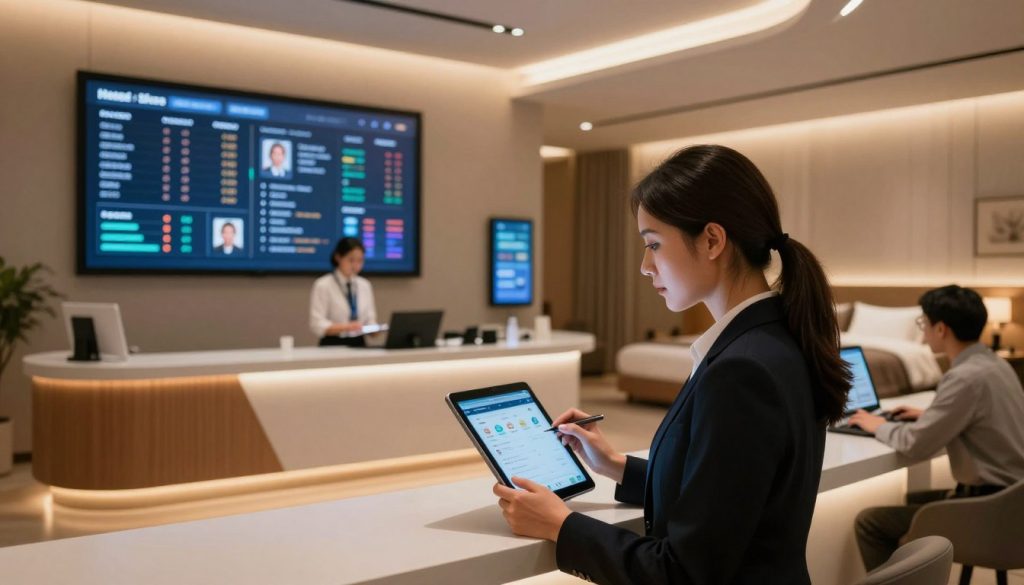
Modern hotel management systems serve as the central nervous system for your business. By replacing manual, error-prone processes with automated precision, these platforms ensure that every detail—from bookings to inventory—is tracked accurately. You can explore more about the role of technology in enhancing efficiency by integrating these robust digital tools.
Current Trends in Hospitality Technology
Staying ahead of hospitality industry trends is vital for long-term success. We are seeing a massive move toward cloud-based solutions that allow managers to oversee operations from anywhere. These advancements help you connect fragmented systems, ensuring that your front-of-house and back-of-house teams remain perfectly synchronised.
For further insights into how these tools are evolving, you can visit the Hospoware blog for expert guidance. Adopting these hospitality industry trends early allows you to focus on what truly matters: delivering exceptional guest experiences. Data-driven decision-making is now the standard for successful venues.
Benefits of Automation in Operations
Automation is the most effective way to reduce labour pressure while maintaining high service standards. By automating repetitive administrative tasks, your staff can dedicate more time to direct guest interaction. This hotel management approach eliminates the friction that often slows down daily workflows.
Efficiency is not just about speed; it is about consistency. When you remove the human element from routine data entry, you significantly lower the risk of costly mistakes. Embracing automation empowers your team to operate with confidence and precision every single day.
How Hospoware Enhances Efficiency and Guest Experience
Fragmented software is the silent killer of efficiency in the modern Australian hospitality landscape. When your systems do not talk to each other, your staff spends more time managing technical debt than serving guests. Hospoware acts as a comprehensive ecosystem designed to eliminate this friction by connecting your entire operation into one unified platform.
By centralising your digital tools, you regain control over your daily output. This approach allows you to focus on what truly matters: delivering exceptional experiences while maintaining a profitable business model.
Streamlining Workflows Through Integrated Solutions
Operational friction often arises from manual data entry and disconnected platforms. Our integrated solutions bridge these gaps, ensuring that your front-of-house and back-of-house operations function as a single unit. This is particularly vital for complex tasks like food and beverage management, where precision is non-negotiable.
When your inventory systems sync automatically with your point-of-sale, you reduce waste and human error. You no longer need to jump between multiple dashboards to understand your stock levels or daily performance. Everything you need is accessible in one place, saving your team valuable hours every week.
Improving Decision-Making with Data-Driven Insights
Raw data is useless without the right context. Hospoware transforms your operational metrics into clear, actionable intelligence that empowers you to make decisive, informed choices. You can identify trends in real-time, allowing you to adjust your strategy before small issues become costly problems.
These insights directly impact your bottom line by highlighting areas for cost reduction and revenue growth. Whether you are optimising your menu pricing or adjusting staff rosters, you are backed by accurate information. This level of clarity is essential for any operator looking to scale their business effectively.
Enhancing Guest Engagement and Satisfaction
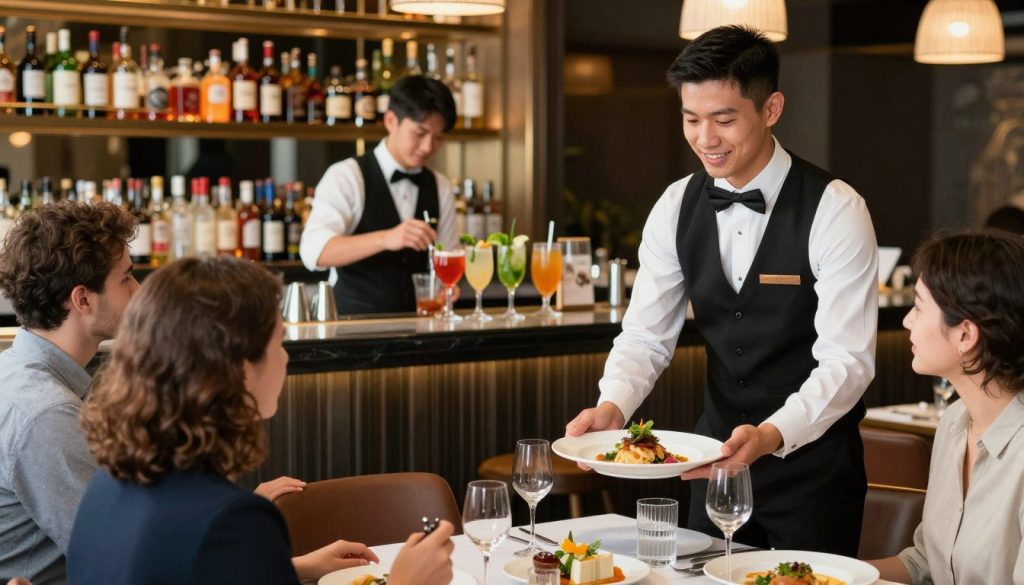
Technology should never get in the way of the human element. By automating repetitive administrative tasks, your staff is free to focus entirely on customer service in hospitality. A seamless backend experience translates directly to a smoother, more enjoyable visit for your patrons.
When your team is not distracted by technical glitches, they can provide the personalised attention that keeps guests coming back. Ultimately, Hospoware helps you master the balance between operational efficiency and the high-touch service that defines your brand.
Real-World Success Stories and Measurable Outcomes
Operational excellence is not just a theoretical goal for modern venues. It is a tangible reality for businesses that embrace digital transformation to refine their restaurant operations.
Evidence of Operational Excellence
The Rockpool Dining Group serves as a prime example of how integrated systems drive performance. By centralising data, they reduced waste and improved labour scheduling across multiple high-volume sites. These shifts directly boosted their bottom line while maintaining high service standards.
Scaling Through Smart Technology
Franchise groups like Guzman y Gomez demonstrate the power of scalable tech stacks. They utilise automated inventory tracking to ensure consistency across every location. This approach allows owners to focus on growth rather than manual administrative tasks.
The Path to Profitability
Digital transformation provides the visibility needed to make sharp, data-backed decisions. Operators who replace fragmented manual processes with unified platforms see immediate gains in efficiency. You can achieve similar results by auditing your current workflows today. Start by identifying one bottleneck in your restaurant operations and applying a digital solution to resolve it. Your business deserves the clarity that comes with modern management tools.











